There’s no way out but through No other avenue There’s nothing left to do There’s no one left but You
I stand before the gate With time and place and date I can no longer wait To proceed to my fate
I’ll lose or I will win I’ll end or I’ll begin I’ll find out what’s within I’ll die or live again
______________________
Sometimes you run out of moves and have to fight the giant, slay the dragon, face the judgment of God, or make the long put off appointment with a doctor for that nagging pain that you hoped would go away but instead of it going away it has gotten worse.
Often these are the turning points in our lives that either crush us and our dreams, or in facing them and succeeding, they free us to live more abundantly than ever.
(Ex: “You mean that I could have gotten rid of that pain in my lower abdomen with this medication 5 months ago if I’d just made a doctor’s appointment instead of ignoring it? Now that I feel great I’m gonna dance!”)
You know, maybe these are the people who are always so happy in the medication ads that they show in the U.S.
Psy definitely has the look of someone who went through something and won. And on the other side of his thing was ‘Gangnam Style.’ Maybe you’ll find your own Gangnam Style, too.
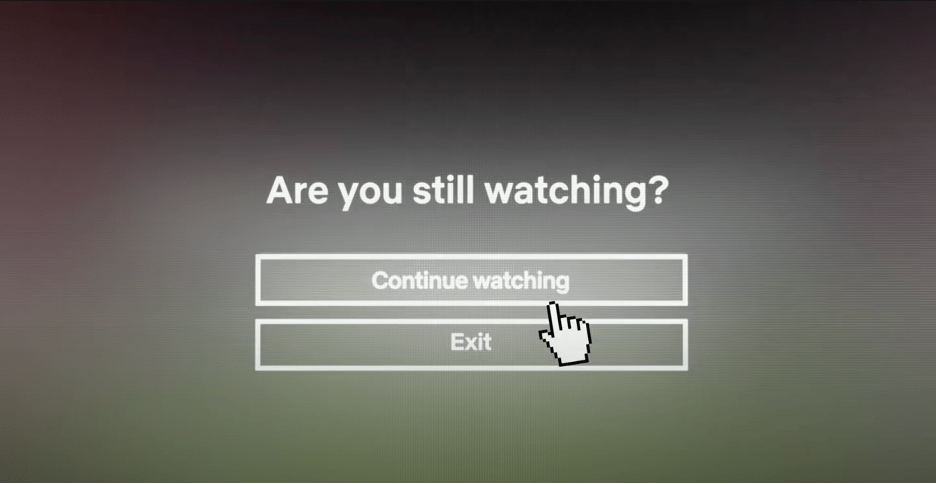
He considers the darkened screen’s question without any signs of shame or remorse.
“Are you still watching?”
“Yes,” he replies to no one, with irritation in his tone, and no awareness that his escape has long since become a prison.
Sometimes I think maybe the American Amish were onto something, with respect to deciding when and how some technology is too much. But then I think about churning my own butter and press the button to continue watching.
The tree’s bark is whole. But inside it rots away. Surprise! It falls down.
______________________
A lot of the time, once a tree starts to hollow out, there are visual clues that this is happening, but seeing requires one to be close and to pay attention. If the fall is a surprise, you weren’t doing those things.
Birds might not know, or care, if the structure wherein they are nesting is dying from the inside out. Maybe they should. Of course, birds can fly so the collapse really only matters while the eggs are being sat upon or in that small window after hatching before the young learn to fly.
I sometimes read about how smart birds are, but that’s rarely what I see out in nature. Anecdotally, “bird brain” makes a lot of sense to me as a pejorative. That said, I don’t have any intention to get on bad terms with crows or ravens. I don’t intend to get on good terms with them, either. I’m going to maintain a ‘no terms’ policy of distance kept unless or until they force my hand to offer them friendship.
The haiku above can be literal or it can be a metaphor. I leave that to the discretion of the reader. If you suspect a friend is hollowing out, it means you’re standing close to him or her and paying attention. I don’t pretend to know what to do for someone, after one makes that observation, but I think it’s good practice to be close and to pay attention to the people we care about. Life has a way of keeping us busy, and self-occupied, and treating each other like the birds treat a tree.
“It says, ‘They’re gonna tell you that they found me, and that I am dead, but don’t believe them, even if they show you a body.’”
______________________________
If you’ve spent any amount of time talking to me, (and I mean any amount – I open conversations with strangers by bringing this up) you know that I’m pretty obsessed with the hyper-realistic face mask technology utilized by the CIA.
I’m also pretty sure this is where George R.R. Martin got his inspiration for ASoIaF’s “Faceless Men.” The thing is, though, this is real and not actually magic. People would be freaked out if the government confirmed the Federal Reserve Bank sent lieutenants out to enforce its will, using face stealing magical murderers, but nobody cares if intel agencies wield a similar but somewhat more mundane version of this ability.
Well… if you acknowledge that this tech exists, then its potential uses are enormous. You could use the masks for the purposes for which the CIA openly admits to using them – namely to allow spies to hide when cornered in a tight spot. But a little creative thinking opens up other possible uses, too. If you’re thinking altruistically, you could give burn victims their old face back – in a manner of speaking, anyway. You could use them to create a wider range of body double options for famous people. A nefarious group could use a person’s face, on someone else, to outright replace that person if he/she is becoming inconvenient. (I assume this is cheaper and more effective than cloning people.) You could put one of these masks on a dead body and convince even a person’s loved ones that he/she died, when in reality they just buried a mask of their loved one’s face on some other person’s body. (Maybe in that scenario their loved one is permanently off the grid of society now, for one reason or another.)
We know this technology exists. Yet almost nobody builds the knowledge into how they view what might be happening around them, in the world. Maybe it’s just easier to take what we see at face value, even if we know that it might be false. You probably can’t convince your friends and loved ones to switch from handshakes and hugs to pulling on each other’s noses, as a greeting, to make sure nobody is someone else in disguise.
If all of your choices seem bad, and you feel as though you’re always choosing between two evils and picking the lesser, eventually the lesser evil ruins you, too, though maybe not as quickly as the greater one would have. Most people at some point go through periods of their life where our options seem to be this way.
Ex: If Jim works all the time, he can pay his expenses but never sees his wife and kids. If Jim doesn’t work all the time, he sees his wife and kids but can’t pay his bills.
What do you do in an untenable situation?
Forgive the bad language:
Here’s a more family friendly answer to that same scenario:
In antiquity, this was a “Gordian Knot” situation. (via wiki)
The cutting of the Gordian Knot is an Ancient Greeklegend associated with Alexander the Great in Gordium in Phrygia, regarding a complex knot that tied an oxcart. Reputedly, whoever could untie it would be destined to rule all of Asia. In 333 BC, Alexander was challenged to untie the knot. Instead of untangling it laboriously as expected, he dramatically cut through it with his sword. This is used as a metaphor for using brute force to solve a seemingly-intractable problem.
Turn him to any cause of policy, The Gordian Knot of it he will unloose, Familiar as his garter
The Phrygians had no king, but an oracle at Telmissus (the ancient capital of Lycia) decreed that the next man to enter the city driving an ox-cart should become king. A peasant farmer named Gordias drove into town on an ox-cart and was immediately declared king. Out of gratitude, his son Midas dedicated the ox-cart to the Phrygian god Sabazios (whom the Greeks identified with Zeus) and tied it to a post with an intricate knot of cornel bark (Cornus mas). The knot was later described by Roman historian Quintus Curtius Rufus as comprising “several knots all so tightly entangled that it was impossible to see how they were fastened”.
The ox-cart still stood in the palace of the former kings of Phrygia at Gordium in the fourth century BC when Alexander the Great arrived, at which point Phrygia had been reduced to a satrapy, or province, of the Persian Empire. An oracle had declared that any man who could unravel its elaborate knots was destined to rule over all of Asia. Alexander the Great wanted to untie the knot but struggled to do so before reasoning that it would make no difference how the knot was loosed. Sources from antiquity disagree on his solution. In one version of the story, he drew his sword and sliced it in half with a single stroke. However, Plutarch and Arrian relate that, according to Aristobulus, Alexander pulled the linchpin from the pole to which the yoke was fastened, exposing the two ends of the cord and allowing him to untie the knot without having to cut through it. Some classical scholars regard this as more plausible than the popular account. Literary sources of the story include Arrian (Anabasis Alexandri2.3), Quintus Curtius (3.1.14), Justin‘s epitome of Pompeius Trogus (11.7.3), and Aelian‘s De Natura Animalium 13.1.
Alexander the Great later went on to conquer Asia as far as the Indus and the Oxus, thus partially fulfilling the prophecy.
Interpretations
The knot may have been a religious knot-cipher guarded by priests and priestesses. Robert Graves suggested that it may have symbolised the ineffable name of Dionysus that, knotted like a cipher, would have been passed on through generations of priests and revealed only to the kings of Phrygia.
Unlike popular fable, genuine mythology has few completely arbitrary elements. This myth taken as a whole seems designed to confer legitimacy to dynastic change in this central Anatolian kingdom: thus Alexander’s “brutal cutting of the knot … ended an ancient dispensation.”
The ox-cart suggests a longer voyage, rather than a local journey, perhaps linking Alexander the Great with an attested origin-myth in Macedon, of which Alexander is most likely to have been aware. Based on this origin myth, the new dynasty was not immemorially ancient, but had widely remembered origins in a local, but non-priestly “outsider” class, represented by Greek reports equally as an eponymous peasant or the locally attested, authentically Phrygian in his ox-cart. Roller (1984) separates out authentic Phrygian elements in the Greek reports and finds a folk-tale element and a religious one, linking the dynastic founder (with the cults of “Zeus” and Cybele).
Other Greek myths legitimize dynasties by right of conquest (compare Cadmus), but in this myth the stressed legitimising oracle suggests that the previous dynasty was a race of priest-kings allied to the unidentified oracular deity.
In truth, most of the time, we have more than two options. If the only options we can see look like bad ones, it might be time to ask someone else what they can see (or, as Kirk would put it, you change the conditions of the test.) Otherwise… eventually those lesser evils will defeat us as surely as the greater ones.
He followed his heart, But left his mind behind, And his unguarded thoughts were captured.
She was led by her mind, But went apart from her heart, And her untended love was stolen.
_______________________________
I want to do this (but it’s a bad idea.) I should do this (but I don’t want to.)
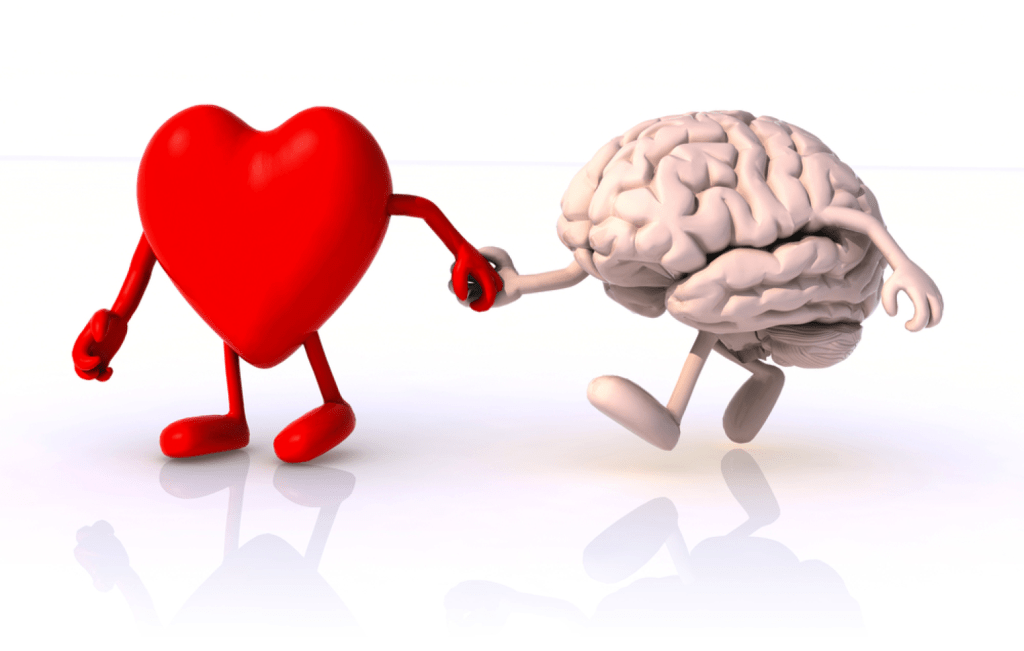
It’s not always possible to get your heart and mind together and in a state of agreement, but you live in greater peace if you make that the goal for your own decision-making.
You can also evaluate people by how well they do this, or whether they even attempt to do this. More often than not, when you meet someone who seems to be a magnet for drama, or a person who lives to complain, their decision-making framework is not an internally cooperative one. You aren’t likely to find peace in the vicinity of such a person.
A not completely negligible number of people have found out through sites like 23andMe and Ancestry that the person they thought was their cousin was actually their half-brother. Or that their sibling is actually their half-sibling and so is the neighbor down the street. I can’t imagine being 85 years old, thinking that you’ve almost made it to the grave with your secrets, and then everything comes out into the open because your grandkid wanted to know which type of European they are.
If you’re curious about your heritage, you can always take one of those trendy DNA tests. Sites like 23andMe and AncestryDNA offer users the opportunity to take a closer look at their genetics, and by all accounts, they’re largely accurate. There’s no easier way to find out if you truly have Scandinavian heritage, or if you’re Irish enough to celebrate St. Patrick’s Day guilt free. In 2017 alone, about 12 million Americans purchased genetic genealogy tests. That means around 1 out of every 25 American adults have access to detailed genetic information—and, by all accounts, that number is going up. However, there’s a dark side to online genetic tests: They occasionally unearth uncomfortable information. In fact, the major DNA testing sites explicitly warn their users about that possibility. “You may discover unexpected facts about yourself or your family when using our services,” Ancestry.com’s privacy page warns. “Once discoveries are made, we can’t undo them.” Granted, these situations are rare, but when they occur, they have life-altering consequences. We looked into a few cases where people received results they weren’t expecting (and what happened next).
1. A woman learns that she has more in common with her husband than she’d anticipated.
Liane Kupferberg Carter met her husband Marc during a vacation in Nassau. It was a storybook romance—or, as she described it in a piece for The Cut, “rom-com cute.” “I was 25; he was two years older,” she wrote. “Initially, he was chasing my roommate. We struck up an intense conversation on the plane home, and by the time we landed at JFK, I had the unbidden thought, ‘I could marry a guy like this.’” Spoiler alert: She married him. After arriving home, Liane discovered that Marc lived one block away from her Manhattan apartment. Flash forward a few years, and they were planning their lives together. They tied the knot, and everyone lived happily ever after. https://www.instagram.com/p/BSbz-HRgSA_/ Well, sort of. 38 years later, Liane signed up for 23andMe, and one day, she received an email: “You have new DNA relatives.” The relative in question was her husband, Marc. He was her third cousin. Before you get all creeped out, it’s important to know that third cousins don’t have a significantly higher risk of birth abnormalities than totally unrelated people. In fact, one Icelandic study showed that third- or fourth-cousin couples tend to be well suited biologically and typically have more kids than other couples. There’s even some research suggesting that first cousins’ risks are only a few percentage points higher than other couples (and cousin marriage was fairly common throughout history—Albert Einstein, Charles Darwin, and Edgar Allan Poe all married their cousins, and we certainly don’t look at them like they’re rogue Game of Thrones characters).
One of Carter’s children has an epileptic disorder and autism, but there’s no clear link between the couple’s genetic similarity and the boy’s conditions. While Liane admits that her unexpected genealogical revelation gave her some pause, she never doubted that her husband was the right man for her. “I don’t need the imprimatur of 23andMe to tell me what I already know with bone-deep certainty: our connection is a decades’ long conversation that continues to nurture and sustain us both,” she wrote. In other words, she’s, uh, glad she married her cousin.
2. A woman gets a DNA test for Christmas (and loses her sense of identity).
Linda Ketchum of Glendale, California received an AncestryDNA test from her husband as a Christmas present. Per a report in The New York Post, she wasn’t expecting much; she simply wanted to trace back her heritage. “My dad was German, and my mother was Scottish-English,” she told the paper. “I thought it’d be fun to learn a little about my genetic ethnicity, to trace how all the pieces came together.” Unfortunately, the results were fairly dramatic. Ketchum discovered that she had no biological link to her father whatsoever. Instead, she had numerous connections to Hispanic people in the site’s database. “At first I didn’t believe it,” she said. “But then I kept re-checking it, and I realized, ‘Oh my God, does this mean I’m…I’m Hispanic!’” Her real biological father was a man of Hispanic descent. As both of her parents were deceased, she had nowhere to turn for answers. “All these years I thought I was German on my dad’s side, but all of a sudden it was dawning on me that my dad wasn’t my real dad and I had an entirely different ethnicity.” Ketchum told the paper that she was fairly traumatized. She lost her identity, and she began wondering whether she was related to random Hispanic people she saw on the street. She eventually tracked down her real biological father, Bill Chavez, who lived in New Mexico. He had also passed away, so she wasn’t able to connect with him. Ketchum’s story doesn’t have a happy ending, per se, but she’s at peace with the discovery. Still, she frequently thinks about the family she never met. “I still wonder sometimes, would my life have been different if I’d known this earlier?” she said. “My real father, my actual grandparents, they all spoke fluent Spanish. I can’t even speak a word of it!”
3. A CNBC anchor receives shocking information (and ends up writing a book).
Journalist Bill Griffeth took a DNA test in 2012, hoping to learn more about his European ancestors. He’d had an ongoing interest in genealogy—he’s on the board of Boston’s New England Historic Genealogical Society—and he had even written a book about his ancestors’ journey to the United States. Griffeth was extremely proud of his family, and when his cousin asked him to participate in genetic testing to get more information about their family origins, he happily agreed.
Hey, he’s part of this article, so you probably know where this is going. The test showed that Griffeth had no biological relation to his late father. When he received word via email, he was crushed. “My body responded before my brain could,” Griffeth wrote in his memoirThe Stranger in My Genes. “I experienced a strange sensation of floating, and I could no longer feel the chair I was sitting in or the Blackberry I was holding. My breathing became labored and shallow and I heard a roaring in my ears like ocean waves crashing off in the distance.” Initially, Griffeth denied the results, insisting that the company that tested his DNA had made some mistake. He actually went on the air on CNBC within hours of receiving the news and acted as though nothing had happened. For months, he refused to accept reality. Eventually, the truth set in: His mother had had an affair, which she’d hidden from her family for decades. He eventually decided to confront her with the information.
“There was a time when I said, ‘I don’t want to pursue this any further, I don’t want to trouble Mom with it,’” Griffeth told the Extreme Genes podcast. “But as my brother said, ‘What if you want answers eventually and she’s gone, what are you going to do? And what about your children, they’re going to need answers down the road?’” “We really needed to know the truth, so I presented her with the DNA evidence, and she took it like a champ. She admitted that she had made a mistake when she was younger, and that was that.” These days, Griffeth is at peace with his family history. He doesn’t discuss the matter with his mother, but when he decided to write a book about his experience, she gave him her blessing.
This was released 3 years ago today. Since then, so many people have reached out to me with similar stories. I’ve made some lasting friendships. As one friends has said, you don’t get over a shocking DNA test result, but you get through it. Cheers to my fellow DNA club members. pic.twitter.com/iIsy66Mxh0
“We don’t talk about it anymore,” he said. “…She’s of a different generation, a different time.” Since going public with his story, Griffeth has heard from dozens of people about their own DNA testing mishaps. He says his perspective has gradually changed; he knows if his mother hadn’t made her “mistake,” he wouldn’t be here, and he takes comfort in knowing his situation isn’t unique. “The only takeaway I can have from this is to be grateful about it,” he said. “…I encourage anybody, if you’re going through this, reach out. It’ll be a difficult first step, but you gotta be able to tell somebody.” “I just think that DNA testing is going to have a profound impact, not only on biotechnology and medicine—it’s already having an impact there—but I think it’s going to have a profound impact on our social culture.”
4. A woman gets a doctor-ordered DNA test, with tragic results.
While many people get DNA tests to learn about their hereditary history, some choose to get tested for medical reasons. Certain hereditary conditions have genetic markers that can help doctors diagnose, prevent, and even cure diseases before they become life threatening. In fact, many direct-to-consumer DNA testing services like 23andMe offer specialized tests for these genetic markers—but they warn that people shouldn’t make medical decisions based on their screenings. Maureen Boesen has a family history of cancer, and she and her two sisters entered a university study to determine whether or not they had a BRCA gene mutation that would raise her risk of developing the disease. Boesen tested positive.
“It was just devastating because I knew what breast cancer and ovarian cancer can do to a family,” she told KSHB in Kansas City. “The first question out of my mouth was, ‘Is there any chance this could be wrong?’ And the researcher said ‘No.’” To limit her chances of developing cancer, Boesen underwent a preventive double mastectomy at 23. Years later, she also decided to undergo a complete hysterectomy, but prior to that procedure, doctors performed another test.
“I was at work, and the first thing [the doctor] said was, ‘We need to talk,’” she recalled. “And my heart just sank. And she said, ‘You’re negative!’ and I just started bawling. I was angry. I was regretful. I was happy. I was sad.” According to the U.S. Preventive Service Task Force’s recommendations for BRCA testing, doctors should screen some women with cancer in their family histories, but false positives occur occasionally. It’s unclear why Boesen’s physicians didn’t re-test her before carrying out her double mastectomy, but her story is a good indication of how genetic tests can be misleading—and why a second opinion is always helpful when making serious medical decisions. “I wish what I had been told was, ‘If you don’t trust it, get another test,’” Boesen said. “But that’s not what I was told, and my life could have been so different.”
5. A woman finds out a secret about her family…but decides to do some investigating.
Kristen Brown received a shock when her aunt sent off for a commercial DNA test: According to the results, Brown’s grandfather wasn’t a full-blooded Syrian. That led to a small family scandal. “If we weren’t who we thought we were, well, then, who were we?” Brown wrote for Gizmodo. But to Brown, something didn’t seem right. She suspected that the test was inaccurate, so she mailed DNA samples to three major commercial DNA testers…and received extremely different results from each. She’s not the only one. In 2018, reporter Rafi Letzler took nine DNA tests from three companies and received six distinctly different results. Even when a single company performs a test multiple times, the results can change dramatically. How could that happen? For starters, those heritage estimates (think “you’re 9 percent Scandinavian” and other such results) are just that—estimates—and they’re not as accurate as you might assume. To determine users’ heritage, sites compare the DNA of all of the people who’ve already taken the test. If a person’s genetic makeup is more similar to, say, the DNA of Scandinavian users, the service will conclude that the user has some Scandinavian heritage. However, the services can only work with whatever data is available. Heritage estimates will vary from one site to the next—if the site has a lot of Italian users, it’s more likely to provide accurate heritage estimates for people with Italian backgrounds, and conversely, if the site’s database doesn’t have many Middle Eastern samples to use as a comparison point, it will have trouble accurately determining the heritage of a person with a Middle Eastern background. “Your DNA is only part of what determines who you are, even if the analysis of it is correct,” Brown wrote. “…If the messaging of consumer DNA companies more accurately reflected the science, though, it might be a lot less compelling: Spit in a tube and find out where on the planet it’s statistically probable that you share ancestry with today.” That’s not to say that commercial genetic tests are worthless; they can provide some useful information about heritage, and they can accurately determine relationships between different users. But if you assume that the tests are perfect, the results are in: You’re 99 percent naive.
Rise up, dear body, face the day Refuse to let fatigue hold sway You’ve life to live and much to give Dare to venture, be active Left foot forward, then the right Your journey lasts until it’s night Walk hard, good body, but be wise Know where your outer limit lies You once flew fast with eagle’s wings When then you drank from youthful springs But now you’re aged, and not yet home With many miles left to roam, And crucial matters to attend — Press on, my body, ’til the end.
________________________________
It creeps up on you.
After a couple of decades of being able to do seemingly anything, with no ill effects, one day your neck hurts when you wake up because the pillow you slept on was either too firm, or not firm enough. Or maybe it’s that the food you’ve been eating for your entire life all of a sudden doesn’t digest as effortlessly as it once did. Or maybe your lower back hurts when you stand up and sit down.
It just gets more difficult from there.
But what do you do when your body starts to betray you and you still (God willing) have decades left to live? You cajole yourself into action and you start taking better care of yourself. I won’t presume to give anyone specific advice on how to do that, but my philosophy has been to just try forming one good healthy habit at a time. It takes about 90-100 days to form a habit. But over the course of a few years, the good habits start adding up.
The electricity has been off for nearly two and a half weeks and I must either join and likely die in the food riots outside or starve alone.
Someday my nameless forgotten skeleton will be discovered in a house filled with gold, silver, and jewels, or I must resign myself to being killed and having my house looted when someone finds out.
I never imagined, when blowing out the birthday candles, that having the most money in the world might have these unintended consequences.
I always like the idea of there being unintended consequences for self-gratification. I mean, if you had all of the money in the world, that would mean someone else doesn’t have it anymore, right? Society would fall apart pretty quickly. There’s something inherently “ill-gotten” about wished for riches, fame, etc. They weren’t earned so someone, somewhere, must pay a price for them.
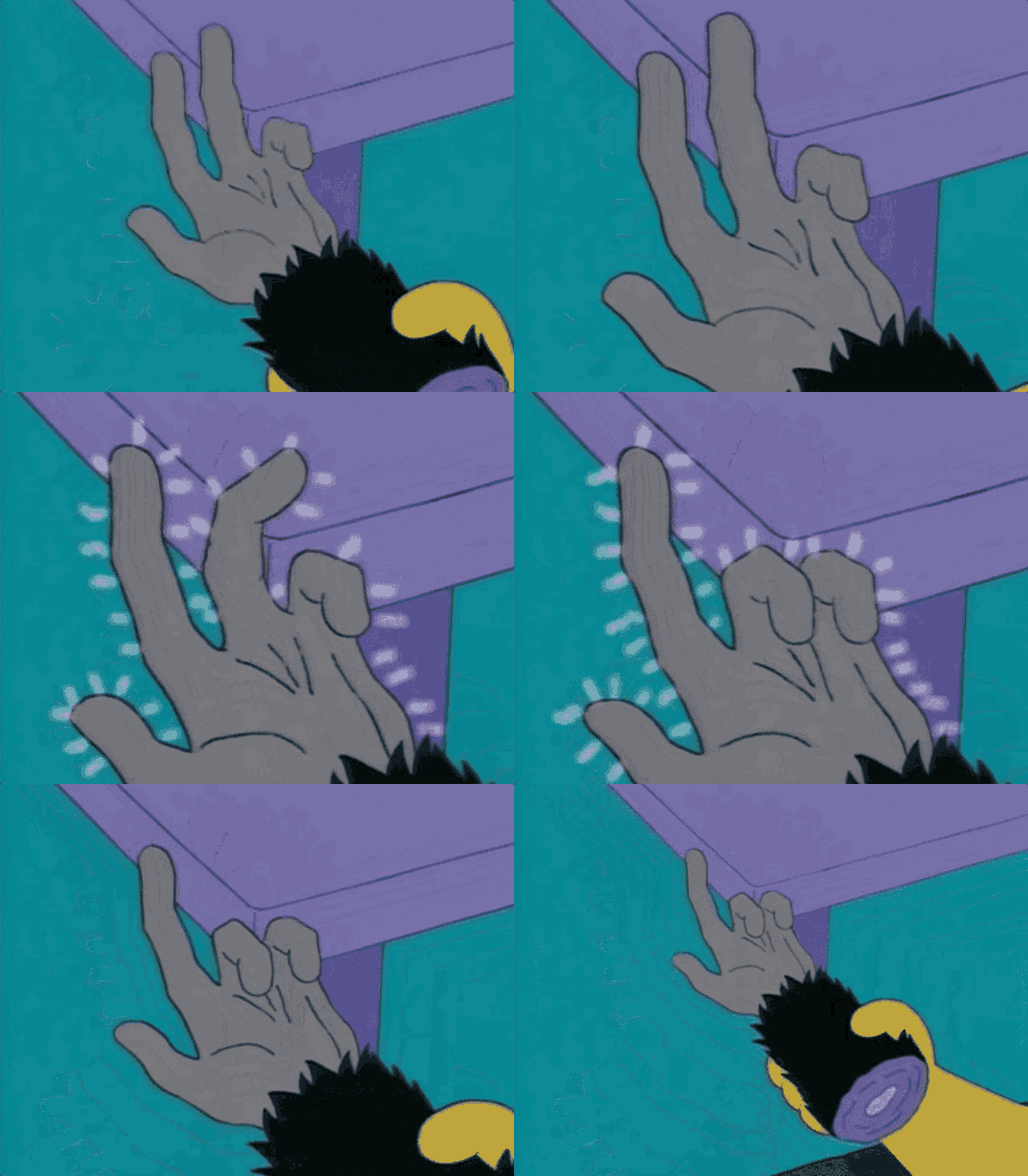
As the gif might indicate, this story idea exists already and was done very well in a short horror story called “The Monkey’s Paw.”
I tried to think through what I might do if I found my house flooded with treasure. I’d be afraid to tell anyone. Maybe the smart thing to do would be to immediately tell the authorities… but that would absolutely bring in the media and the attention of those who were robbed via magic. You’d be afraid to turn on your car engine for the rest of your life. Society can’t have someone who has wishes like that granted, ever making similar wishes again.
If you tried to give it away, even covertly, it would eventually get traced back to you and the same thing would happen.
Your best bet might be to take a small amount of the treasure, change your name and effectively disappear. When your house and the loot is eventually discovered, hopefully you’re well hidden enough by then to stay that way. But that would be hard to pull off. So far, my best case scenario is that the granted wish would send one into something akin to a self-imposed witness protection.
Maybe wealth like that is limited to banks and dragons for a reason.







 Dusty Writes