Hardly breathing, for fear that the sound might give away her location, Amanda hides as still as a stone behind a long-hanging shirt deep inside her bedroom closet. After a few long moments, her pursuer opens the door, his eyes racing over the small space, finally coming to a triumphant rest in her direction.
“I found you!” shouts the boy, before explaining to his sister that he noticed the toe of her shoe sticking out from beneath the shirt.
_______________________
Children’s games like Hide and Seek, or Tag, can feel a lot more intense when described from the child’s perspective. From the perspective of an 8 year old, her 9 year old brother’s pursuit might *feel* like this.
I used to live in a house that was broken into and robbed on a somewhat regular basis. Fortunately, whoever it was that made a habit of stealing from me (and my elderly next door neighbors) preferred to do it when we were away. Also fortunately, I only lived in that house for a few years. I got tired of doing something like the following every night, all night long:
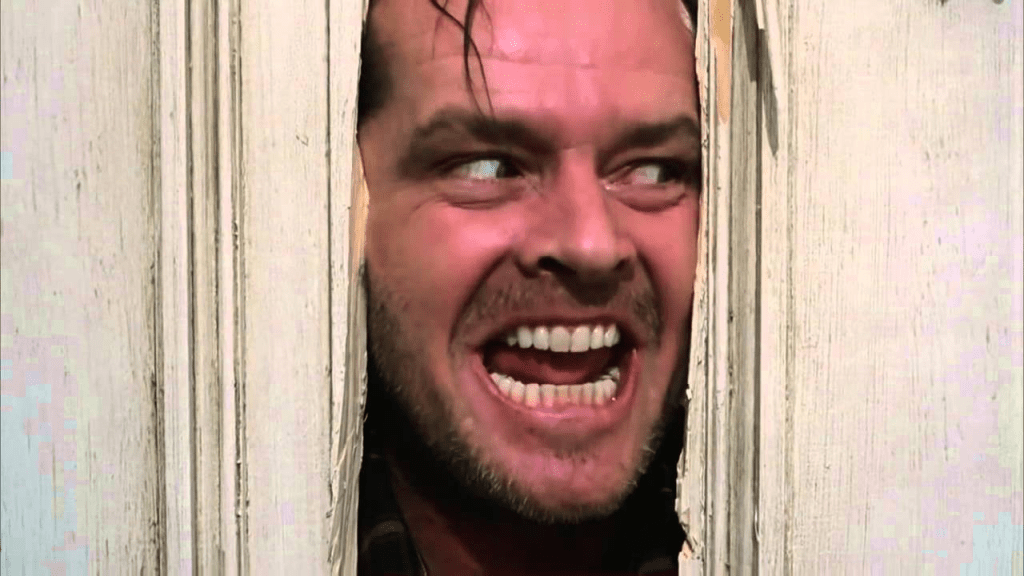
Kevin’s dad was 100% in the mob.
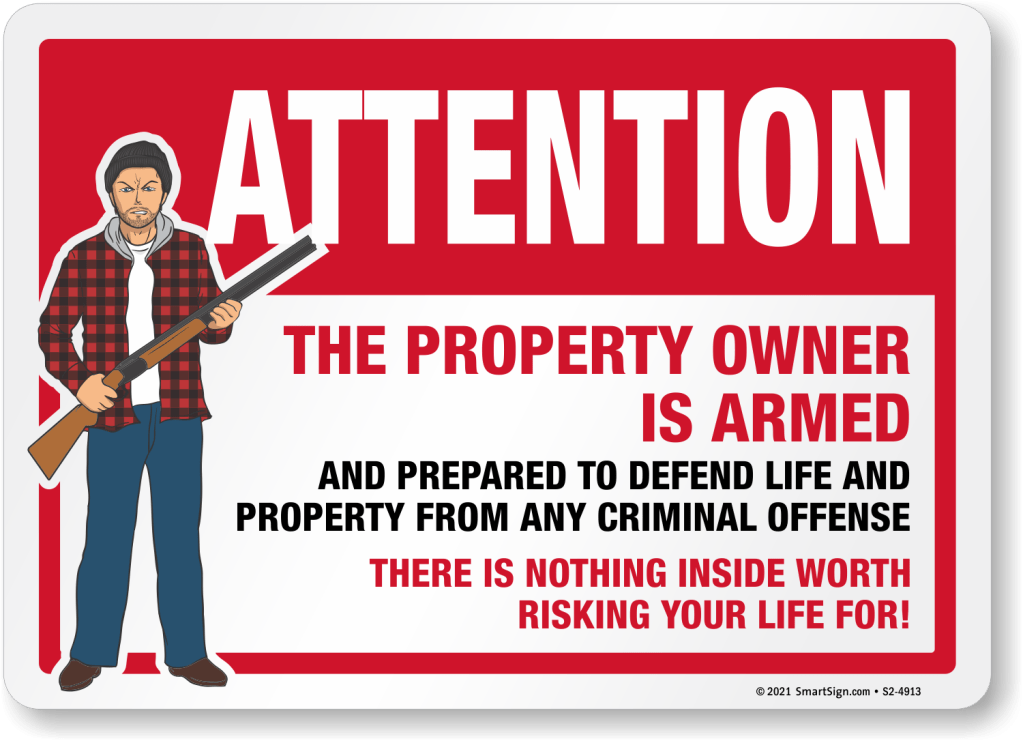
Anyway, it has always stuck with me that breaking into someone’s house is an incredibly dangerous and stupid thing to do. In my case, I had an alarm on the house. While it’s true the police never came quickly, it was possible that just one time they might have. I also never bothered replacing my nice stuff with more nice stuff. When my plasma screen TV exited my house through the back window, I replaced it with a 200 pound unmovable (but flat screen) television behemoth. The biggest annoyance was paying to have my glass window panes replaced. But someone kept breaking in, and risking his life, on the off chance that I got nice stuff when he wasn’t looking.
I have noticed two strange and juxtaposed behavioral phenomena in recent times. There seems to be a growing number of people who have no reign over their own emotions. Some of that might be performative cries either for help or for clicks and engagement. Some of it might be the growing mental health crisis. There seems to be less shame in having a public breakdown than there once was.
On the other hand though, I also notice the opposite. There also seems to be a growing number of people who seem almost like NPCs within the simulation everyone else lives in. I’m just inherently distrustful of someone who I’ve never seen or heard go on any kind of a rant. This isn’t stoicism, either. It’s palpable emptiness that feels from the outside like interacting with a hypnotized person. If you ask this type of person what they’re passionate about, you’re likely to be met with a confused response.
I don’t know what it all means. My working theory is that we are all born with a flame of some passion inside of us. Some people perhaps let their flame grow wild and it burns them up. Others perhaps snuff theirs out.
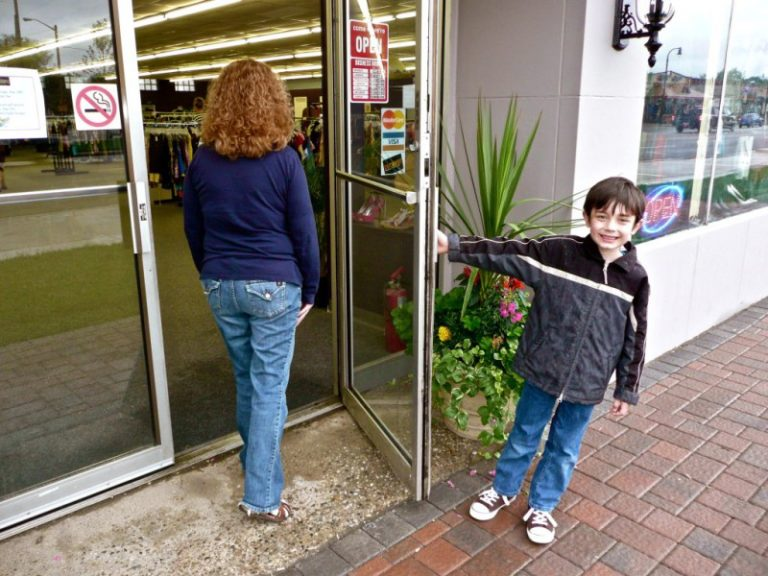
Not all acts of kindness are thoughtful. Sometimes you hold the door for someone, as much by habit as by intention. Yet… occasionally those careless actions matter to someone who has been living on the raggedy edge.
I haven’t ever really been on the raggedy edge, but I do remember some of the random gifts of kindness which have been thrown my way over the years. About eight years ago, at Sonic, the car hop told me that she liked my shirt. As it was one of the many fashion-questionable “bird shirts” I was wearing at the time, I appreciated the compliment immensely. For all I know, she was making fun of me, or she told everyone that about their shirts to boost her tip, but it meant a lot.
The waves crashed into my legs, almost knocking me over, but I righted myself and continued staring out at the endless blue water. Of all the ways I might have died, doing it alone on an island, thousands of miles from another living soul, was not a fate I had ever contemplated.
“On the bright side,” I thought, turning back toward the island, “I do have all of these dead people to keep me company.”
It is easier to start a large fire quickly than to put one out quickly. Much the same, I believe love generally surrenders only slowly.
Inchmeal is a fun word. I hope that someone or something popular brings it back into regular usage.
inchmeal (adv.)
“by inches, inch by inch,” 1580s, from inch (n.1) + Middle English meal “fixed time, period of time, occasion” (see meal (n.1), and compare piecemeal).
late 12c., mēl, “an occasion of taking food, a feast, a supply of food taken at one time for relief of hunger,” also (c. 1200) “an appointed time for eating;” from Old English mæl, Anglian mēl, “fixed time, occasion; a meal,” from Proto-Germanic *mela- (source also of Old Frisian mel “time;” Middle Dutch mael, Dutch maal “time; meal;” Old Norse mal “measure, time, meal;” German Mal “time,” Mahl “meal;” Gothic mel “time, hour”), from PIE *me-lo-, from root *me- (2) “to measure.”
Original sense of “time” is preserved in English in piecemeal; compare Middle English poundmele “by pounds at a time; generously.” Meals-on-wheels for a social service offering home delivery of food to persons unable to purchase or prepare their own is attested by 1952 (from 1947 as a mobile food delivery service without reference to social services). Meal ticket first attested 1865 in literal sense of “ticket of admission to a dining hall;” figurative sense of “source of income or livelihood” is from 1899.
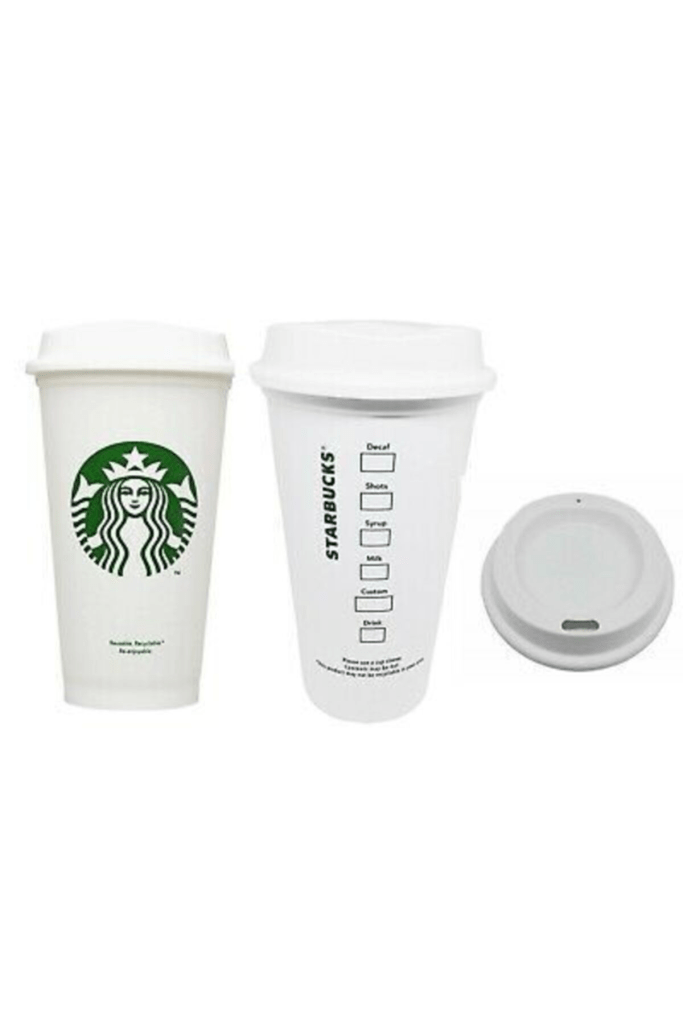
Mike saw that the cute barista who had smiled at him, and filled up his to-go coffee cup, had also drawn a little heart next to where she had written his name. This small gesture led to what became an almost daily ritual of stopping by her counter on the way to his office and purchasing a small heart on a to-go cup filled with coffee.
After a few days of these early morning visits, Mike noticed that the stranger in front of him in line picked up a cup signed “Dave ❤️” – an observation which led to a marked decrease in his morning caffeine intake thereafter.
__________________________
It is amazing how small gestures can sometimes redirect behavior in large ways. It is also amazing how much it can sting to realize that a small gesture is, in fact, small.
This is a response to the old saying, “the pen is mightier than the sword.”
If someone with a sword can take your pen away, is the pen actually mightier than the sword? Or is it that the person with the sword was compelled to take the pen at the behest of someone with a mighty pen?
This all comes down to the nature of power and belief in power. The danger of a pen is that one pen might inspire others to rebel against a different pen. Can a sword do the same? Or is it that word of the sword does it – in which case it is once again the pen?
The same show discussed the same topic and made a powerful case (though I do not believe it actually refutes the one made above.)
Great White Sharks have the best PR, but I’ve always been partial to hammerhead sharks, as sharks go. I just don’t understand how or why that head shape happened, from an evolutionary standpoint. It freaks me out.
Occasionally I see people online interacting with sharks in the ocean. On purpose. Videos like this (see below) cause me to respect sharks less as an adversary.
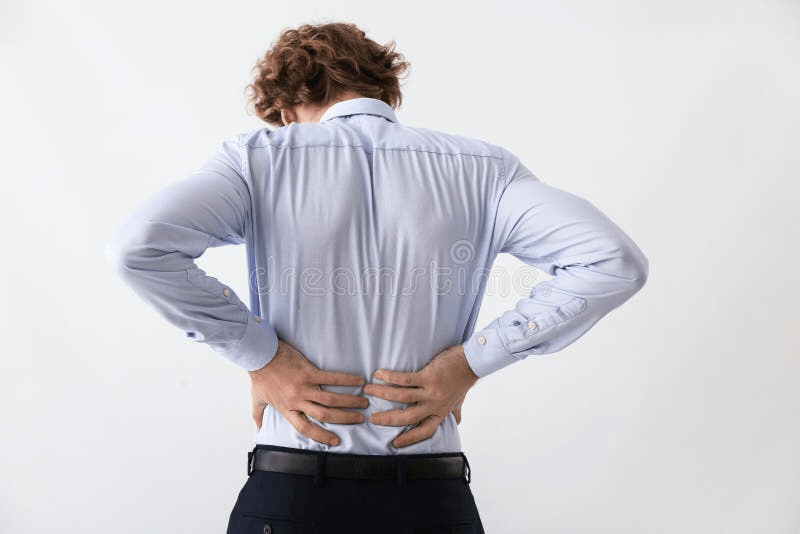
While running his fingers down the middle of his back, looking for the exact origin point of his nagging ache, and intending to dig his thumb into the muscle there, Walter’s fingers feel a small lump of tissue just to the left side of his spine.
He freezes, and suddenly a rush of recent memories flood into his mind, including an odd morning two days prior when his left leg had been numb upon waking.
He then considers whether he should ask his wife to look at the spot or if he should visit the doctor first, alone, to have it looked at, just in case it turns out to be nothing.
I once had a pilar cyst (not a big deal, as I later found out) on my back, that I discovered in this manner. In my case, I asked about it and was told it had always been there. I’d just somehow never noticed it because it’s hard to get a really good accounting of what’s happening in the middle of my back, you know?
It’s weird to think that lumps of tissue, growing where they shouldn’t, should be so scary. And yet…
It’s also interesting how open you can become (or not become) regarding your own body and its oddities while in a long term relationship. Depending on the circumstances, that openness might shift strongly in one direction, or the other, even between the same two people. Eventually, even in the best of cases, your body stops working properly and you cannot really hide that fact. The best person to help is the one you are with the most. Yet it’s also true that the person you are with most often can be the most impacted by those changes. Your “lump of tissue” is to a great extent theirs, too. Your bad news is their bad news.
I guess the alternative is for people to hide their injuries and then once sufficiently sick, to wander off somewhere alone to pass away. That’s a rather bleak thought.




 Dusty Writes